在串流與 AI 夾擊下,動畫產業正在重新定義創作者的價值—動畫師 Sean King 談產業生態、AI 衝擊與仍然存在的選擇
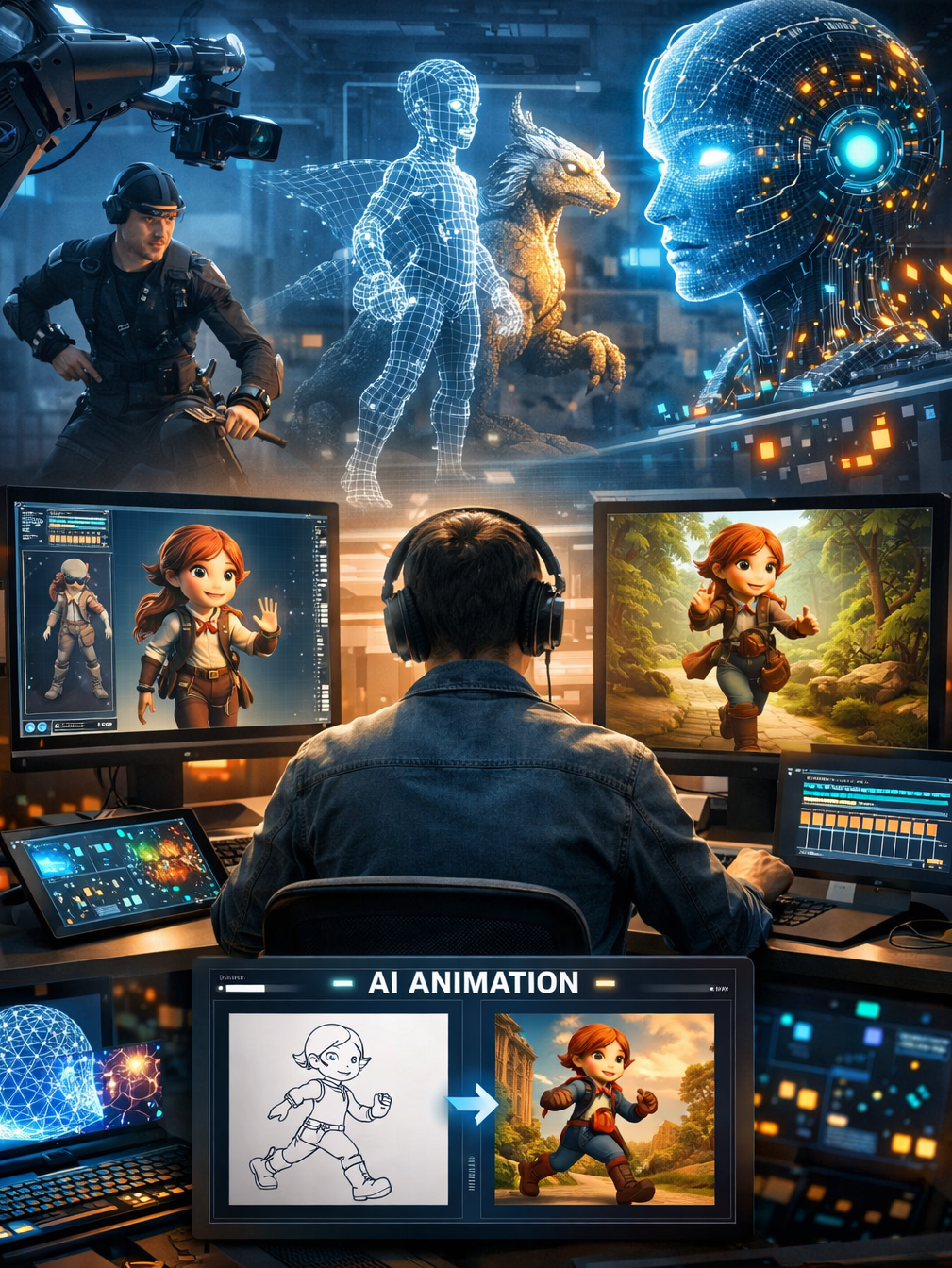
在串流平台與 AI 技術高速演進的時代,動畫產業正站在一個關鍵轉折點。當外界仍在討論 AI 是否會「輔助」創作者時,身處產業第一線的人,早已感受到結構性的變化正在發生。
Sean King,一位長年在北美動畫產業工作的動畫師,在 36 歲那年選擇回到台灣。他的職涯橫跨 2D 與 3D 動畫,曾在溫哥華參與多個國際外包專案,也親眼見證動畫產業如何隨著技術、市場與資本流向而不斷改變。
As streaming platforms and AI technologies evolve at unprecedented speed, the animation industry is standing at a critical turning point. While public discussion often frames AI as a tool that may “assist” creators, those working on the front lines of the industry are already experiencing structural changes in real time.
Sean King, an animator who spent many years working in North America, returned to Taiwan at the age of 36. His career spans both 2D and 3D animation, including participation in international outsourcing projects in Vancouver. Over the years, he has witnessed firsthand how the animation industry continuously reshapes itself in response to technology, market demands, and shifts in capital.
從心理系到動畫產業:現實導向的選擇
「我其實是心理系畢業的。」Sean 笑著說。原本只是為了完成學業出國,卻在過程中逐漸發現,自己真正感興趣的是創作與美術相關的工作,於是轉而投入動畫專業訓練,從 2D 一路走向 3D。
這條路並不浪漫。Sean 坦言,心理學背景對動畫製作本身沒有太多直接幫助,真正重要的,仍然是創意、技術,以及能否在產業現實中站得住腳。
From Psychology to Animation: A Pragmatic Career Turn
“I actually studied psychology,” Sean says with a laugh. Like many international students, he initially went abroad simply to complete his degree. Along the way, however, he realized that his true interest lay in creative and visual work. That realization led him to pursue professional training in animation, starting with 2D and eventually transitioning into 3D as the industry evolved.
It was not a romantic leap. Sean is candid that his psychology background offered little direct advantage in animation production. What truly mattered was creative ability, technical skill, and—perhaps most importantly—the capacity to survive within the realities of the industry.

外包體系下的動畫產業:不穩定成為常態
在北美,特別是溫哥華這樣的外包重鎮,動畫工作多半以合約制為主。四、五個月一個案子,結束後便必須立刻尋找下一份工作。景氣好時很快銜接,景氣差時,等待可能長達數月。
回到台灣後,Sean 反而感受到另一種差異。雖然同樣以外包為主,但目前參與的團隊承接的是美國串流平台較大型、相對穩定的專案,節奏更可預期。他也曾參與《變形金剛》系列、《芭比》動畫等專案,對他而言,作品的光環反而不是重點,真正影響工作體驗的,是製作流程與資源配置是否到位。
Life in an Outsourcing Hub: Instability as the Norm
After returning to Taiwan, Sean noticed a different dynamic. While the industry is still largely driven by outsourcing, the team he is currently working with handles larger, more stable projects for U.S. streaming platforms, making the production pace more predictable. He has also participated in projects such as the Transformers series and Barbie animations, but for him, the prestige of a title is not the main point. What truly shapes the working experience is whether the production workflow is sound and resources are allocated effectively.
In North America, especially in outsourcing hubs like Vancouver, animation work is largely contract-based. Projects typically last four to five months, and once a contract ends, artists must immediately begin searching for the next job. When the market is strong, transitions can be quick; during downturns, however, the waiting period can stretch on for months.
AI 不再只是工具,而是改寫製作流程的力量
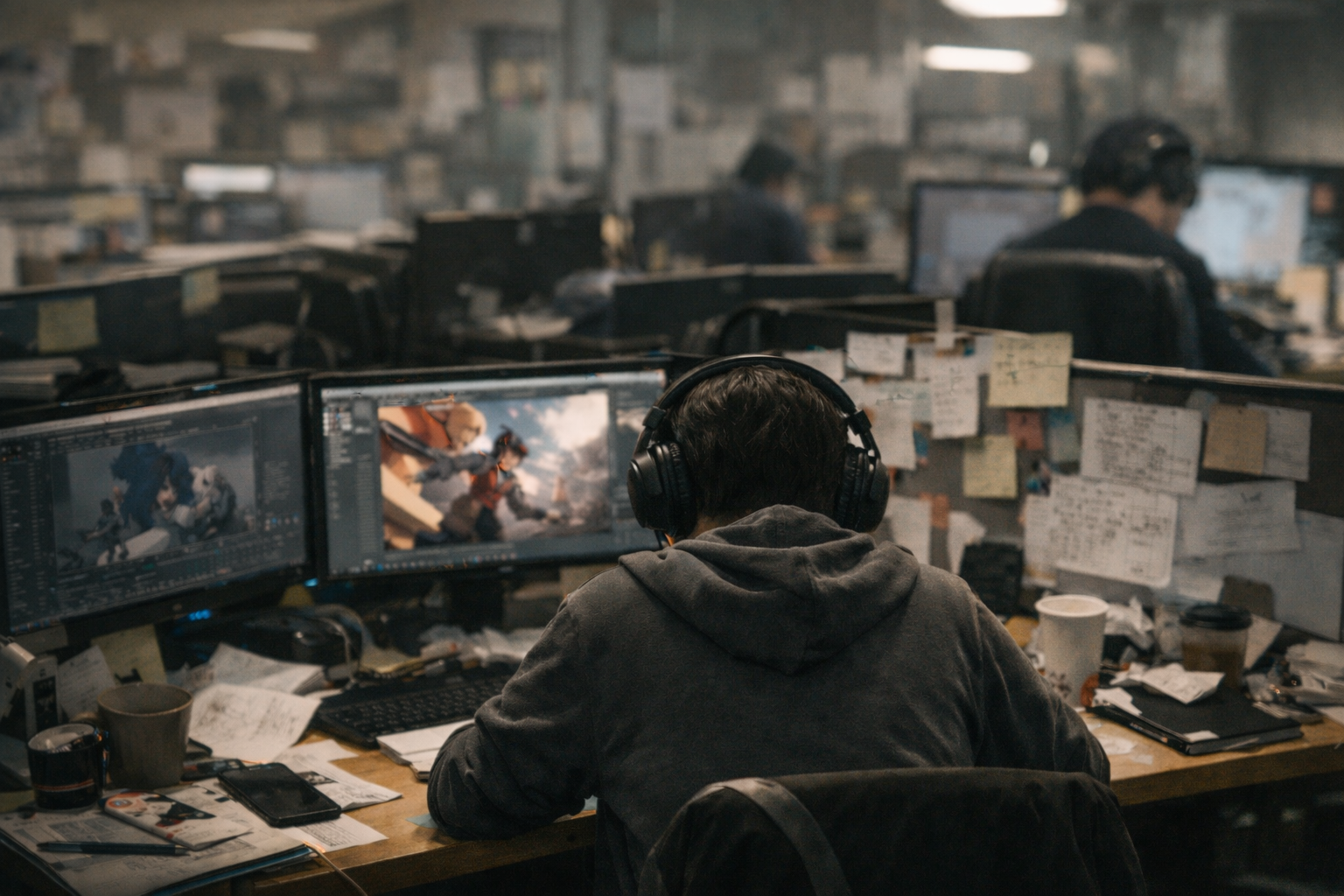
如果說串流平台改變了動畫的商業模式,那麼 AI 正在改變的是「怎麼做動畫」。Sean 對此並不過度樂觀。
他指出,AI 生成影像早已進入廣告與短內容市場。輸入文字與需求,就能快速產出成品,這在成本與效率上,對傳統動畫製作形成直接衝擊。
在影集與長篇動畫中,AI 的影響仍屬初期,但在基礎建模、補格、簡單動作等高度重複的工作上,取代已經正在發生。「很多事情現在是程式先做,人再微調。」而隨著技術成熟,這些「還需要人工處理的部分」,也可能逐步被吸收。
AI Is No Longer a Tool—It’s Reshaping the Production Pipeline
If streaming platforms transformed the business model of animation, AI is now transforming how animation is made. Sean does not sugarcoat his outlook.
AI-generated imagery has already become commonplace in advertising and short-form content. With a simple text prompt and a set of requirements, a 30-second product video can be produced rapidly. From a cost and efficiency standpoint, this represents a direct challenge to labor-intensive animation workflows.
For long-form animation and series, AI’s impact is still in its early stages. However, in areas such as basic modeling, in-betweening, and simple motion work—tasks that are highly repetitive—replacement is already underway. “In many cases, the system does the first pass, and humans make adjustments afterward,” Sean explains. As AI models improve, even those remaining human-dependent refinements may gradually disappear.
當團隊縮小,創作判斷反而更重要
這樣的轉變,讓動畫製作團隊的規模逐漸縮小。未來可能只需要三到五人的小型團隊,就能產出大量短內容,回應當代觀眾注意力碎片化、以手機為主要載體的觀看習慣。
但即便在高度外包與自動化加速的產業環境中,仍有一些角色在短期內難以被取代——那些負責掌握整體方向、敘事脈絡與創意判斷的人。導演、創意總監、編劇等站在創作決策上層的角色,核心不只是把事情執行完成,而是負責判斷「該不該這樣做」。AI 可以加速流程、提高效率,卻無法替代這種建立在經驗、脈絡與價值觀之上的判斷,因此反而讓這些角色變得更加關鍵。
Smaller Teams, Greater Emphasis on Creative Judgment
This shift is gradually leading to smaller animation production teams. In the future, it may only take a compact team of three to five people to produce a large volume of short-form content, responding to contemporary viewing habits shaped by fragmented attention spans and mobile-first consumption.
Even so, within an industry increasingly driven by outsourcing and accelerated by automation, certain roles remain difficult to replace in the short term—those responsible for setting overall direction, narrative coherence, and creative judgment. Directors, creative directors, and writers occupy the upper levels of creative decision-making; their role is not merely to execute tasks, but to determine whether something should be done at all. While AI can streamline workflows and boost efficiency, it cannot replace judgment grounded in experience, context, and values—making these roles, paradoxically, even more essential.

留下來的,不一定是最有熱情的人
談到是否還會建議年輕人投入動畫產業,Sean 並沒有給出浪漫的答案。他坦言,許多仍留在產業中的人,早已不是單靠熱情支撐,而是現實——家庭、轉職成本,以及多年累積後難以抽身的處境。
但他也補充,這並不代表動畫產業沒有未來,而是創作者必須更清楚自己站在哪個位置。
Not everyone who stays does so out of passion
When asked whether he would still recommend young people enter the animation industry, Sean pauses. His answer is measured rather than romantic. Many who remain in the field today are not sustained solely by passion, but by reality—family responsibilities, the cost of career change, and the difficulty of leaving after years of specialization.
Still, he does not see this as proof that animation has no future. Rather, it signals a need for creators to understand where they stand within the evolving ecosystem.
結語|在 AI 時代,清楚自己的價值,就是最大的希望
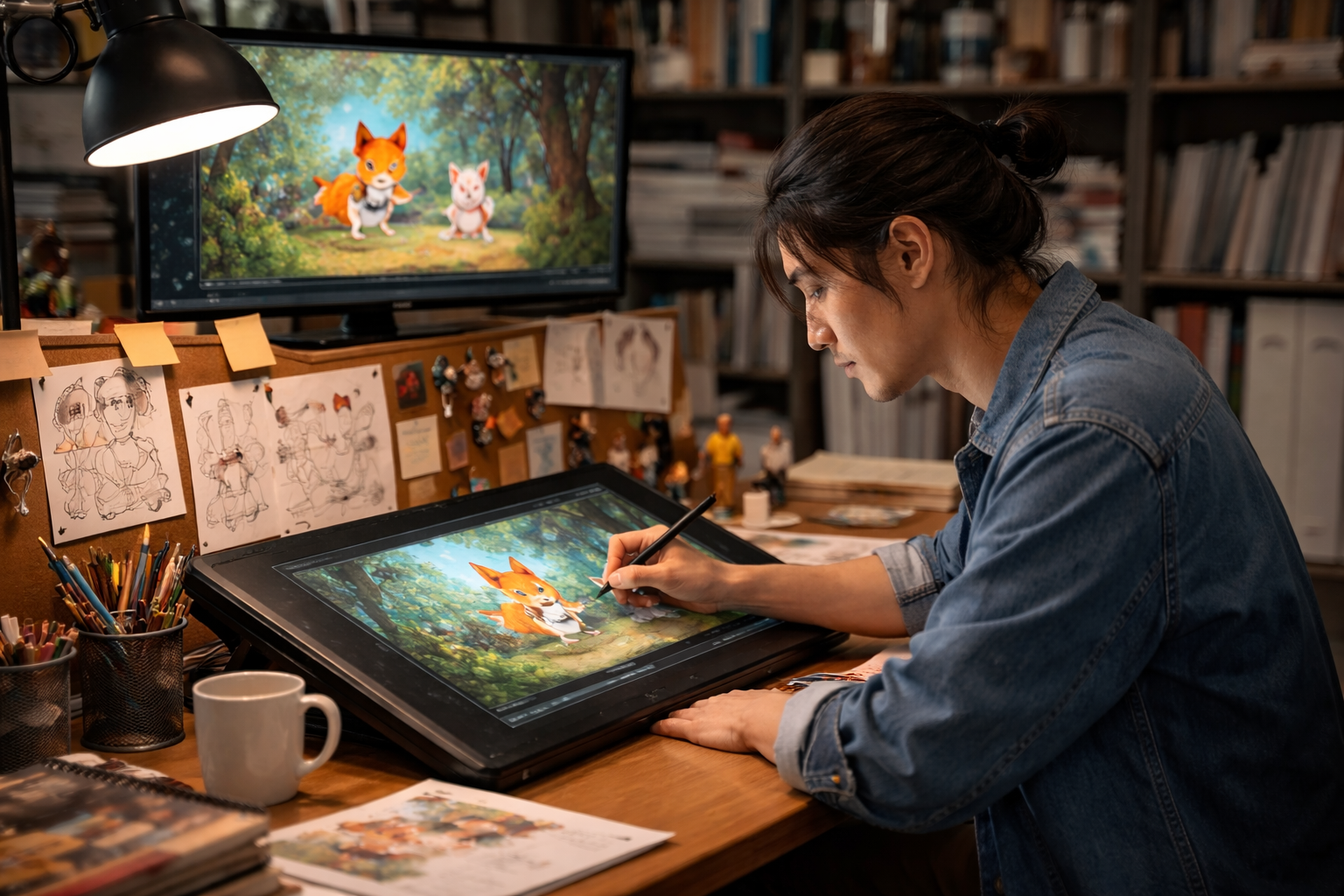
這不是一個輕鬆的產業故事,卻是一個清醒的現場觀察。動畫產業沒有消失,只是正在被重塑。
而對創作者而言,真正的希望,或許不在於抗拒 AI,而在於理解變化、看清自己的不可取代之處。當工具越來越強,能留下來的,往往是最清楚「為什麼要這樣創作」的人。
Conclusion: In the AI Era, Clarity of Value Is the Real Source of Hope
This is not an optimistic story in the traditional sense, but it is an honest one. The animation industry is not disappearing—it is being reshaped.
For creators, the most important question may no longer be whether AI will replace them, but whether they are positioned in a role that cannot easily be replaced. As tools grow more powerful, those who remain are often the ones who understand not just how to create, but why they create.